
Study In Italy
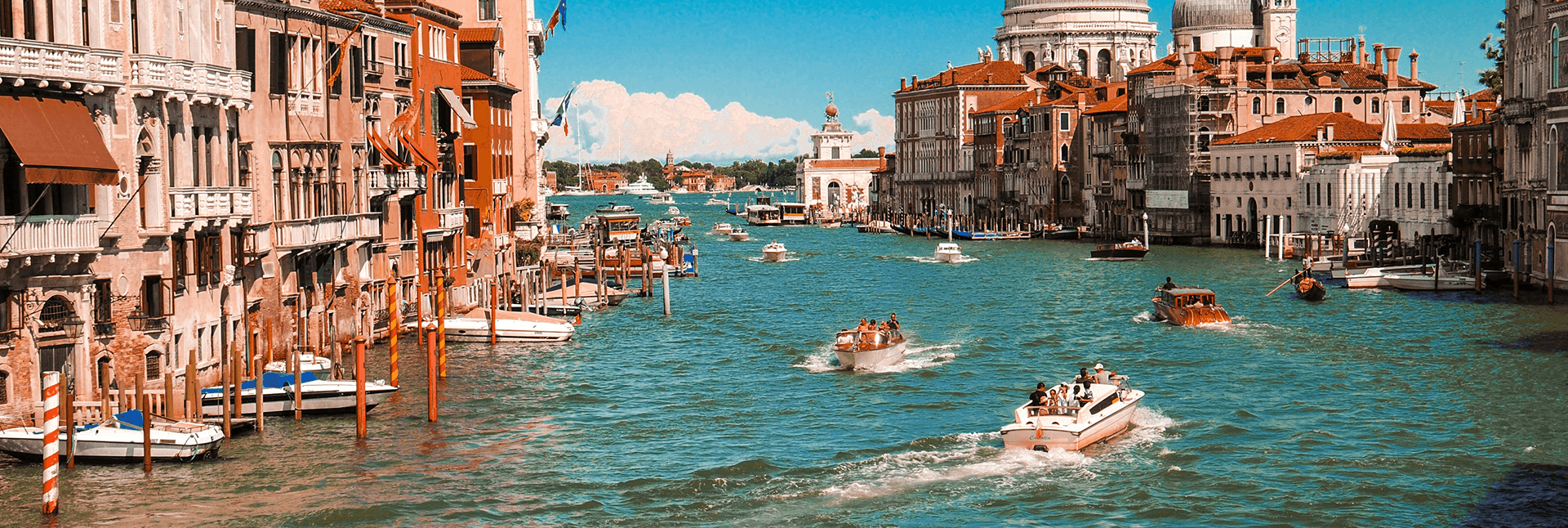
With its historical sites and picturesque scenery, Italy draws an increasing number of visitors annually. For international students seeking top-quality higher education and an affordable and comfortable lifestyle, Italy proves a perfect destination for future endeavors! Every year, hundreds of international students decide to pursue their higher education degrees in Italy and work towards a prosperous future. Italy is an excellent destination due to its renowned educational institutions and safe lifestyle.
Top Universities in Italy
University of Bologna (Unibo)
Sapienza University of Rome
University of Padua (Università degli Studi di Padova)
Politecnico di Milano
University of Milan (La Statale)
Cost Of Studying in Italy
Europe's most affordable study location is Italy. Smaller towns tend to be far more affordable, even though big cities like Rome or Milan might have expensive living expenses. Moreover, larger educational institutions typically assist with housing; if you're lucky, you might be able to acquire a room in an affordable student residence.
Italy has reasonably priced public universities when compared to other European nations. In Italy, annual tuition at public colleges approximately costs around 1,000 EUR. Additionally, prestigious universities with high rankings may charge extra.
The University of Rome Tor Vergata is an exception, with tuition dependent on your family's financial status: students pay between a minimum of approximately 150 EUR and a maximum of approximately 5,000 EUR annually, depending on their family income.
Why Study in Italy?
Italy is home to the oldest institutions in the West and has a solid, excellent higher education system. For over hundreds of years, the nation has served as a center for higher education, science, and the arts.
You will experience vast cultural, historic, and touristic heritages by studying abroad in Italy. Whichever town or city you decide to study in, you will instantly be surrounded by mouth watering cuisine, a thriving arts scene, endless chances to immerse yourself in Italian culture, and the well-known Mediterranean way of life. In terms of studying abroad and experiencing a new culture or way of life, Italy has had high ratings.
Italy is home to some of the world's and Europe's oldest universities. In addition, Bologna University was established in 1088, followed by Padua University and Naples University in 1224.
Since 1999, Italy's educational system has adopted the Bologna system. Under the 3+2, 3-cycle system, five years of study enable students to graduate with a bachelor's or master's degree from an Italian educational institution.
Admission Requirements
Identity document
Personal Statement
Letter of recommendation
University application form
Academic transcript of your previous studies
English or Italian language proficiency as per the program
Application Documents
Security form
Copy of valid passport
Passport size photographs
English language proficiency certificate
High school certificate
Medical examination form
Proof of financial statements
Copy of birth certificate or any other certificate verifying the student’s age
Scholarships
The Italian Government offers scholarships each year to foreign nationals or residents of Italy who wish to pursue formal education in Italy and participate in bilateral and multilateral study and research initiatives. In addition, Scholarships granted by the Italian Government to Foreigners and Nationals living abroad and the new portal Study in Italy have all the updated information.
The new government portal includes a list of countries that have received scholarships, a call for applications, and an online application platform. Italy's degree programs may have different tuition costs.
In Italy, tuition payments are demanded of both native and international students. There are several scholarship options available to help with the remaining expenses. If you're keen to study in Italy and are searching for scholarships, our team of experts can assist you every step of the way. Using our extensive database of scholarship opportunities and online tools, candidates may choose the scholarship that best suits their needs.
Student Visa Requirements
A valid passport
Visa application form
Proof of no criminal record
Proof of accommodation in Italy
Proof of associated application fee
Proof of adequate medical insurance
A copy of your itinerary to and from Italy
Proof of financial means to support yourself
Letter of acceptance from your institution in Italy
Exam scores of language proficiency in Italian or English (depending on your study program)
Post-Study Work Opportunities
With the Italy post-study work visa, overseas students, not members of the European Union, can prolong their study visas and use them to hunt for jobs in Italy or other Shenzhen nations. Fortunately, EU students may work in Italy without a work authorization. Moreover, international students must renew their residency status to continue working in Italy.
If you intend to remain in Italy after completing your higher education, you must comprehend every aspect of the post-study work visa. Employment opportunities are abundant for individuals who have finished their higher education in Italy after graduating. Additionally, Italy is a developed nation with a high per capita national GDP, possessing advanced infrastructure and industries.
FAQs about Studying in Italy
1. Is IELTS required to study in Italy?
IELTS is not universally required to study in Italy, but it depends on the program and university. Many English-taught programs may require IELTS or an equivalent English language proficiency test, especially for non-native English speakers.
2. How much does it cost to study in Italy?
The cost of studying in Italy can vary. Public universities typically charge between €900 and €4,000 per year for undergraduate courses. Private universities can cost much more. Living expenses range from €700 to €1,000 per month, depending on the city.
3. How much study gap is acceptable in Italy?
Italian universities generally accept a study gap of up to 2-3 years for undergraduate programs. For postgraduate programs, longer gaps can be justified with relevant work experience or additional studies. If you need assistance with your application or justifying your study gap, consider reaching out to Times Consultant, a specialized Italy Study Visa Consultant.